Hold the Flood — Crust
CMB101 · r3 · 2026-09-06 · Combat and Enemy Designer · In review — proposed role, new. Source rules it is built on: Design Document r14 ec1b6c §§3–6; shared grammar and the precedence stack: Combat Rules. Enemies · Design Index · Expansion Brief · Glossary
Name is a functional placeholder. World and Mystery owns the Flood's identity and fiction.
The assumption it deletes
"One discharge stops everything in the water."
The Crust is a body wearing insulation. That is the whole design: the roster's one new fact about conduction is a fact the player already owns from the module in their own rack, applied to a body instead of a slot.
Trigger, action, threat
| Trigger | A dispatch, exactly like a Walker |
| Action | Precedence line 3, unchanged: nearest reachable lit beacon, hold, spread, and chase within pursuit range. Its behaviour is completely ordinary. Only its physics are not |
| Threat | It is the body still walking when everything around it has stopped. It stands unstunned inside a stunned crowd, in the exact place and second the player has committed to standing still and collecting, and it ends an arc chain where it stands |
| Hit count | Three. No more health than anything else — it is not armoured, it is not conductive |
| Conducts? | No. A coil discharge through the water it is standing in does not stop it. An arc chain that reaches it goes no further through it |
| Charge | Killed by the cutter: drops a 1-unit mote, once, like anything else. It cannot be made to shed by a stun, so a district heavy in Crusts is a district where the coil harvest is thinner than the crowd size suggests. It glows until it is killed, like any unshed body — it is non-conducting, not spent |
Telegraph
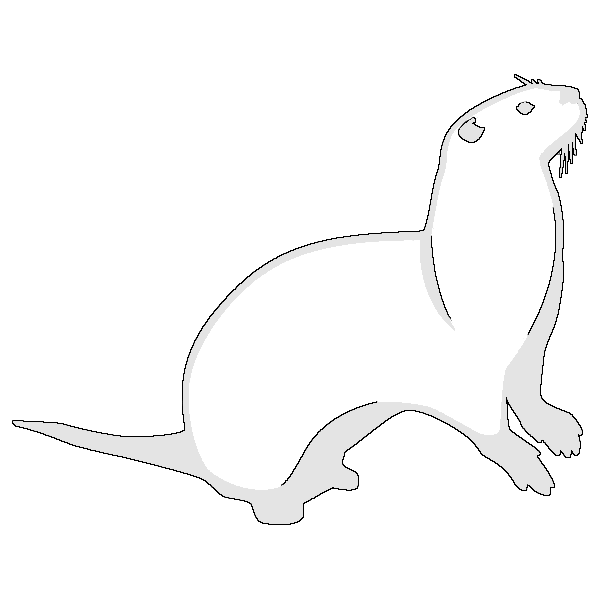
Two independent cues, corrected in r3. Under R4 as revised after PMR004, glow says what is left to take and encrustation says whether current reaches it, and they are separate channels because the answers are separate. A Crust glows, like any unshed body; its broken, encrusted outline — dry mineral scale from the sluice — is what says the coil will not stop it. It reads in a crowd as a change of shape, not of colour or brightness.
Withdrawn in r3: r1 and r2 of this page claimed that mistaking a Crust for a spent Walker was harmless. PM is right that it is not. A spent Walker still conducts and is still stunned; a Crust is neither. A player who confuses them commits to a collection window with bodies walking through it, and pays in health rather than in harvest. That error came from putting two facts on one cue, which is exactly what the corrected R4 stops.
Counterplay, and what each costs
| Counterplay | Cost |
|---|---|
| The cutter, and where you stand. It is the only body in a stunned crowd worth aiming at, and aiming means moving, because the cutter fires at the nearest target and cannot be withheld (R6) | Standing among 44 stunned bodies, the cutter will usually pick a stunned Walker instead. Getting it to pick the Crust means walking toward the Crust. The target line shows what it has chosen |
| Route the arc chain around it — stand so the chain's path does not run through one | The good burst positions and the good collecting positions are not the same positions |
| Leave the water and let them come to you on the bank | You lose the collection window, which is what the discharge was for |
| Accept the contact and collect anyway | One health per touch, from five |
Machinery and equipment
- Coil: the counter-interaction. A discharge's value is now the conducting fraction of the crowd, not its size, and that fraction is readable in advance from the outlines standing in the water.
- Arc: the Crust is a wall in the chain. Under the adopted bounded model (Arc A1: at most three additional bodies per hit, each hop needing proximity and line of sight) a Crust in the chain's path costs the burst those hops, so where the player stands decides which way the chain propagates — the first place in this design where arc positioning matters at all. Corrected in r3: r1 said a chain travelling through energised water would route around a Crust and named the Spark as this role's counter. That rested on R10, which is withdrawn; the arc never energises water, so nothing routes around a Crust and the Spark is not its counter.
- Insulation: the fiction and the mechanic are the same thing the player is wearing. That is the point, and it should be sayable in one sentence by any player: it is wearing what I'm wearing.
- Panel and beacons: ordinary. A Crust routes exactly like the mass.
Placement (for Campaign)
- Arrives in a surge; counts toward the limit of two non-Walker roles per surge.
- Proportion matters more than count: at 10% of a surge it prices a harvest; above roughly a quarter it stops the coil being worth carrying, which is a district saying "do not bring the electrician" and should be a deliberate statement, not an accident.
- Best placed where the player expects to stand still — a channel harvest, a doorway hold, a collection window. A Crust in an area the player runs through does nothing.
- Pairs naturally with the Anchor (see Encounter A): one body that does not answer the light and one that does not answer the current, both standing in the same channel, is two thirds of the spine rule questioned in one place.
Asset note
A silhouette edit of the base body — the same outline broken by encrustation. Whether editing a sprite that way is permitted depends on the individual asset's licence rather than its host's general statement, as GDD §14 and the Asset Licences reference both record; tinting or resizing is an adaptation and some licences forbid it. No asset has been located, inspected, downloaded or created, and no availability is claimed.
If the owner takes GDD §14 decision 2 and the Flood becomes a humanoid mass, this role is unaffected: an encrusted humanoid reads at least as well as an encrusted organism.
Open questions
- Does a Crust conduct to other bodies touching it? My position: no — it is inert in both directions, which is the simpler rule and the one that matches insulation in the rack ("insulation is the only slot that breaks a chain", GDD §5). A one-way version would be a new concept for no gain.
- Can a Crust be made to conduct? My position: no, and nothing should offer it. An enemy the player can convert is a puzzle piece, and this role's job is to be an unarguable limit on a tool.
- Does it block the arc, or end it? My position: the chain does not pass through it, so a chain whose only continuation was through a Crust ends there. It does not absorb or reflect. Stated because "blocks" and "ends" would be the same word in a spec and different behaviours in play.
Reconciliation with DES104 (added in this revision)
The Lead published Campaign 34dc09 and the shared-rule contract Power and Attraction r2 69024c while this page was being drafted. Two consequences for this page. The rule source is now the contract, not GDD §4 — where this page cites the Design Document for a shared rule, cite the contract; the rules are the same and it is the one to cite. The base role is called Walker there, and this page's Drifter is the same role; Walker is the surviving name and the role page is at Walker. The full reconciliation — what held, what conflicts, and the merged roster — is in Enemies §0.